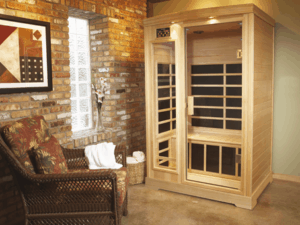
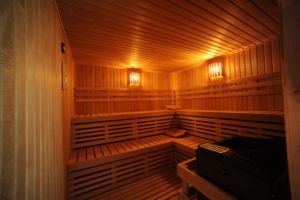
The sauna is a pleasure for the body and mind.
If you have tried the sauna experience and know all its secrets, you can no longer do without it, but you don't want to share this moment with strangers, there is only one solution: install one at home!
Once you've made this decision, the question that immediately arises is: how to choose it?
A few suggestions and the answer will come by itself!
Traditional or infrared sauna
Before choosing materials and sizes, the first decision to make concerns the type of sauna: is a traditional or infrared one better?
:
TRADITIONAL:
- It is energy-intensive, consumes large amounts of energy compared to an infrared one
- The heating time is three times longer compared to an infrared one
- The temperature easily reaches 85°
- The humidity level is higher due to steam
- Assembly is less simple compared to an infrared one
- It can be installed indoors or outdoors without difficulty
- It is not recommended for those suffering from respiratory or cardiovascular problems.
INFRARED:
- The most powerful are three-phase
- They heat up 3 times faster compared to a traditional sauna
- The temperature hovers around 60°
- The humidity level is lower compared to traditional ones
- Assembly is simpler
- You can choose between ceramic or carbon technology, although ceramic is the preferred one
- It is suitable for those suffering from cardiovascular or respiratory problems, rheumatism or lower back pain
- It is perfect for sports enthusiasts as it helps regeneration of scars, sprains, bruises, wounds, inflammations or muscle pain
In both cases it will be possible to have options such as chromotherapy, aromatherapy or music therapy.
The number of loungers and the surface area depend on your taste and the spaces you have available; more space will allow the installation of a greater number of benches or loungers.
MATERIALS
```html

Most sauna cabins are completely made of wood capable of withstanding thermal fluctuations, such as cedar or red spruce, aspen, birch, abachi, hemlock or douglas pine, all very dense, hard and excellent for insulation.
Red cedar has a longer lifespan and remains intact over the years.
Wood is used because it respects tradition and is natural, but above all because it offers several advantages such as:
- Absorption: it retains water vapor or helps keep the sauna air dry, absorbs heat and does not overheat
- Radiating properties: essential for creating the microclimate inside the sauna.
CABIN
A perfect cabin should measure at least 2 meters in length and 1.5 meters in width (2 meters if you want to lie down better).
Finnish saunas (traditional) have a standard height of 2 meters, an ideal measure to provide the necessary space to move around while avoiding heat loss.
There are also smaller ones available on the market, but always remember that an excellent sauna cabin must have a surface area of no less than 2 square meters.
Other elements to pay attention to are:
- Doors: in traditional saunas, the height equals that of the cabin and is 56cm wide, but they can also be narrower to reduce heat loss.
- They are almost always equipped with an isotherm glass and are often made of large glass panels that help avoid feelings of claustrophobia.
- Benches: generally have a depth varying between 50 and 70cm and are placed at different levels to take advantage of the high temperature found at the highest level.
- It is important to verify that the dimensions and placement are suitable for the sauna cabin chosen.
- Stove: the most suitable is a sauna with a higher volcanic stone load (from 18 to 20kg, but some stoves reach 25 kg).
- Ventilation system: ```if the sauna will be positioned in an environment without windows, it is essential to install a duct that directs stale air directly outside.
ELECTRICAL CONSUMPTION

The question we all ask ourselves when thinking of choosing a sauna is: how many kw will it consume?
Energy consumption varies based on the size of the sauna, so the choice will depend first on the number of people who will use this corner of peace and secondly on how often it will be used.
To get an idea of the dimensions, for two people lying down, the cabin must be at least 2 meters in length by 1.5 meters in width.
In such a case, electrical energy consumption will be around 4.5kw.
Considering instead the number of sauna sessions, making an assessment of 1-2 sessions per week of about a couple of hours, the consumption to budget for will be about 3€ per hour.
Consider that the power of the heater is decisive for consumption (from 3 to 9 kw). We suggest you use a probe connected to the heater, which verifies the actual temperature of the sauna space and thus allows you to reduce usage costs.
CUSTOMIZATION
The last elements to consider are physiological needs, personal tastes and accessories.
If you wish to have the benefits of aromatherapy, you can find essential oils in the market that stimulate body wellness; for chromotherapy you can have luminous spotlights installed with the possibility of adjusting color and intensity.
There are timers and hourglasses to indicate your time in the sauna, ergonomic backrests, adjustable headrests. You can also decide to cover the walls of your sauna with Himalayan salt!
This last element has only one constraint: your imagination!!!
```html